Sealed vs Ported Subwoofer Enclosures: Which Is Right for You? | MTX Audio

Sealed or Ported
Subwoofer Enclosures

Sealed or ported subwoofer enclosures — this debate will never be settled because the answer is subjective. The type of music you listen to, the specifications of your subwoofer, the available space in your vehicle, and other factors all play a role. There is no universal winner. The right answer depends on your specific situation.
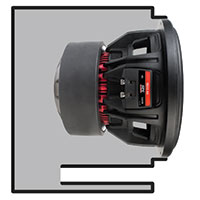
MTX ported subwoofer enclosure
Ported (Vented)
  • Louder output at tuned frequency
  • More efficient — smaller amp required
  • Better cooling for the voice coil
  • Larger physical size
  • Port must be correctly tuned
  • Best for hip-hop, rap, SPL builds
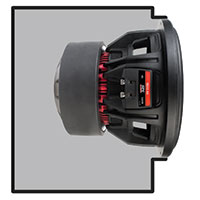
MTX sealed subwoofer enclosure
Sealed
  • Tighter, more accurate bass
  • Smaller and easier to build
  • No port to tune — just build to spec
  • Requires slightly more amplifier power
  • More forgiving of enclosure volume
  • Best for rock, country, SQ builds

We already know that the only way to get full, rich bass from your car audio system is to add a subwoofer. When deciding what style of enclosure to buy or build, you have to answer some questions that will lead you to the right answer for your specific listening preferences and vehicle.

Ported / Vented Enclosures
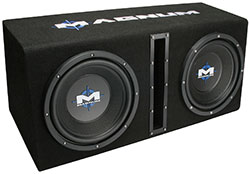
MTX ported subwoofer enclosure with slot port
MTX MB210SP ported enclosure — rectangular slot port on the front panel

If you like your music boomy — vibrating your car's body panels — a ported enclosure is what you want. When built to the correct volume and tuned to the right frequency for your subwoofer, a ported enclosure is generally louder than a sealed one. The woofer and port work together, with the port resonating like a pipe organ to generate more bass than a sealed box can produce.

Ported enclosures are generally larger, so some installations may not have enough available space for one built to proper specifications. Tuning the port is critical. Done correctly, it maximizes output. Done wrong, it can limit performance or cause damage over time. MTX subwoofers include built-in protection to reduce failure risk in improperly tuned ported enclosures, but incorrect tuning will still cause unnecessary stress and hinder performance.

Ports can be round, square, triangular, rectangular, or any custom shape. The enclosure shown above uses a rectangular slot port on the front. Another common configuration places a triangular slot port on the side. The shape matters less than the tuning — it is the port length and diameter (or cross-section area) that determines the tuned frequency.

Ported enclosures are commonly found in SPL competition vehicles. They are also more efficient — they allow subwoofers to produce more output from the same amplifier power, which means you can often use a smaller amp with a ported box than you would need with a comparable sealed box. An additional benefit: the air flowing in and out of the port helps cool the voice coil, making subwoofers in ported enclosures run cooler and last longer.

Sealed Enclosures
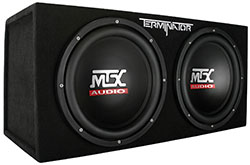
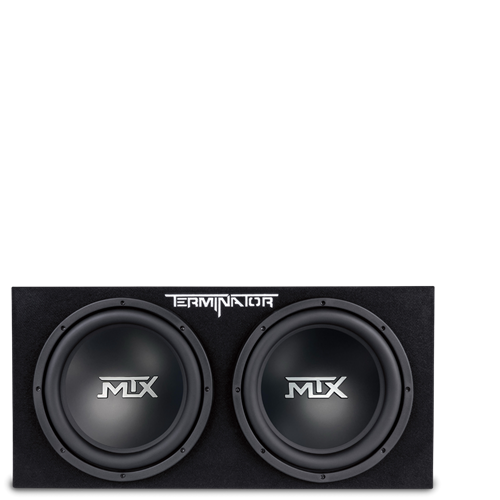
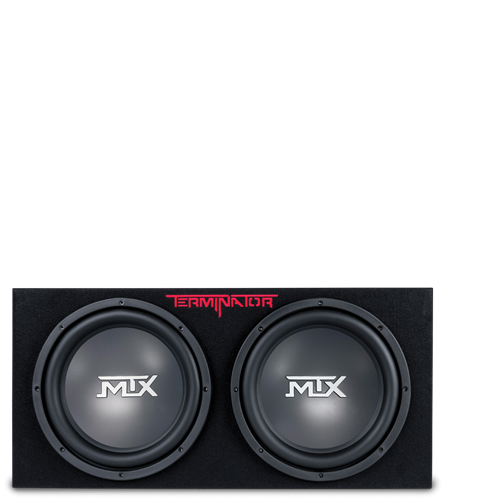
MTX TNE212D sealed dual 12 inch subwoofer enclosure
MTX TNE212D — dual 12" sealed subwoofer enclosure

Some people prefer tight, accurate bass over raw volume. Sealed enclosures are not typically as loud as ported ones, but they still greatly enhance the listening experience by providing more defined low-frequency reproduction. Think kick drums that hit clean and hard — bass you can feel in your chest and in your seat, as if you were front row at a live show.

Sealed enclosures reproduce low frequencies more accurately because the air inside the box acts like a shock absorber, allowing the subwoofer to move back and forth with more control. This controlled movement produces cleaner, more accurate sound. The trade-off is that subwoofers in sealed enclosures may require slightly more amplifier power to achieve the same output level as the same sub in a ported box.

Sealed enclosures are smaller and significantly easier to build. There is no port to calculate or tune — you simply build the box to the manufacturer's recommended volume for your subwoofer.

The Bottom Line

Whether you listen to rap, country, metal, or classical, your sound system will benefit from a subwoofer. How much space you have — or are willing to give up — can be the deciding factor between ported and sealed. But whichever you choose, build the enclosure to the manufacturer's specifications. The best subwoofer on the market will perform like a cheap one if the enclosure is not built correctly.
Build to spec The recommended enclosure volume in your subwoofer's spec sheet is not a suggestion — it is the volume the sub was engineered to work in. A box that is too small or too large will compromise performance and can shorten the life of the driver.
Need to calculate your enclosure volume? Use the MTX subwoofer box calculator to find the net internal volume of your planned enclosure after accounting for material thickness, driver displacement, and port volume.

Key Specifications to Know

Driver Displacement
The volume of space the subwoofer occupies inside the enclosure once installed. Gross enclosure volume minus driver displacement equals the net internal volume, which should match the manufacturer's recommended spec.
Frequency Response
The frequency range a subwoofer can reproduce under normal conditions, expressed in Hz. Actual in-box frequency response varies with enclosure type and tuning.
Recommended Enclosure Volume
The net internal volume the manufacturer recommends after subwoofers are installed. Building to this spec ensures the sub performs to its maximum potential.
Subwoofer Mounting Depth
The depth from the bottom of the mounting flange to the back of the subwoofer. Your enclosure depth must be slightly greater than the mounting depth to ensure a good seal at the flange.
Bottom & Top Depth
Specs found on wedge-style enclosures where the box is wider at the bottom than the top, designed to fit snugly against a rear seat inside a trunk.

Frequently Asked Questions

Is a sealed or ported subwoofer enclosure better?
Neither is universally better — it depends on your priorities. Ported enclosures are generally louder and more efficient, making them ideal for hip-hop, rap, and SPL builds. Sealed enclosures produce tighter, more accurate bass and are smaller and easier to build, making them ideal for rock, country, jazz, or anyone who prioritizes sound quality over maximum volume.
Do ported enclosures require more amplifier power than sealed?
No — ported enclosures are actually more efficient. They allow subwoofers to produce more output from the same amplifier power, meaning you can use a smaller amplifier with a ported enclosure than you would need with a comparable sealed one.
Which enclosure is easier to build?
Sealed enclosures are significantly easier to build. There is no port to calculate or tune — just build the box to the manufacturer's recommended volume. Ported enclosures require precise port calculations and incorrect tuning can limit performance or cause subwoofer damage over time.
Does enclosure type affect subwoofer longevity?
Yes. Subwoofers in ported enclosures run cooler because air flows in and out of the port during cone movement, providing additional voice coil cooling. For extended high-volume use, a properly tuned ported enclosure gives your subwoofer better thermal protection than a sealed box.
What music sounds best in a ported vs sealed enclosure?
Ported enclosures excel with music that has heavy, sustained low-frequency content — hip-hop, rap, and EDM. The louder, boomy output at the tuned frequency suits this genre well. Sealed enclosures work better for music where bass accuracy matters more than raw output — rock, country, jazz, classical, and acoustic music all benefit from the tighter, more controlled response of a sealed box.

Next Steps

Shop subwoofers ›
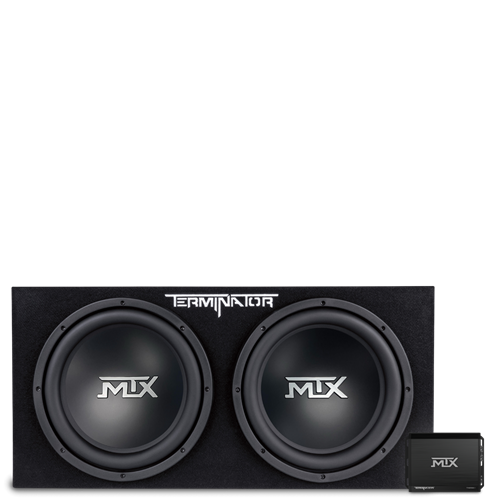
TNP212D2
TNP212D2 — Sealed Package
Dual 12" · Sub + Amp + Box
View product
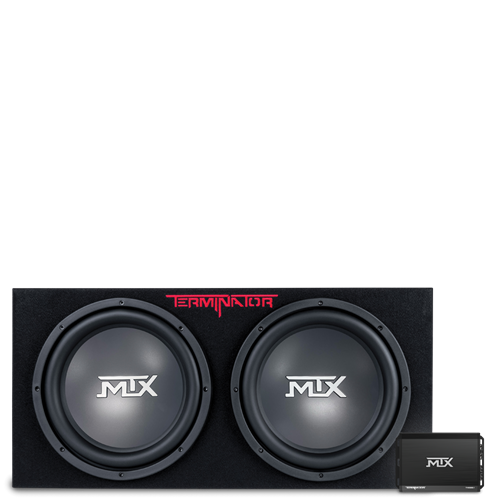
TNP212DV
TNP212DV — Ported Package
Dual 12" · Sub + Amp + Box
View product
TNE212D
TNE212D — Sealed Enclosure
Dual 12" · Sub + Box only
View product
TNE212DV
TNE212DV — Ported Enclosure
Dual 12" · Sub + Box only
View product